Industrial heat systems are becoming more demanding in 2026. Higher operating temperatures, tighter energy targets, and longer production cycles expose weak fluid choices quickly. Heat Transfer Oil must move heat efficiently, resist oxidation, and remain stable under repeated heating and cooling. It also needs predictable viscosity through the entire operating range.
Dr. James R. Welty, a respected thermal engineering educator and coauthor of Fundamentals of Momentum, Heat, and Mass Transfer, stated, “Heat transfer depends on a temperature difference.” That simple principle still guides practical fluid selection. A suitable Heat Transfer Oil should carry heat from the heater to the process without excessive pumping resistance. It should also limit deposits inside narrow pipes, valves, and heat exchangers. Small deposits can become expensive restrictions.
This 2026 guide compares heat transfer oils for manufacturing, chemical processing, food equipment, plastics, and other industrial applications. It considers thermal stability, film temperature, viscosity, flash point, oxidation control, maintenance needs, and total operating cost. Laboratory data matters. Field experience matters more when the fluid faces dusty surroundings, frequent shutdowns, or uneven heating.
There is no perfect oil.
A fluid that performs well in a clean thermal system may disappoint in a poorly vented expansion tank. That limitation deserves attention. Selection should follow the equipment design, maximum film temperature, pump capacity, and replacement schedule. Safety data sheets and supplier test results should support every decision. Price alone remains a weak measure of value. The most reliable choice is usually the oil that protects temperature control, equipment life, and production consistency over time.
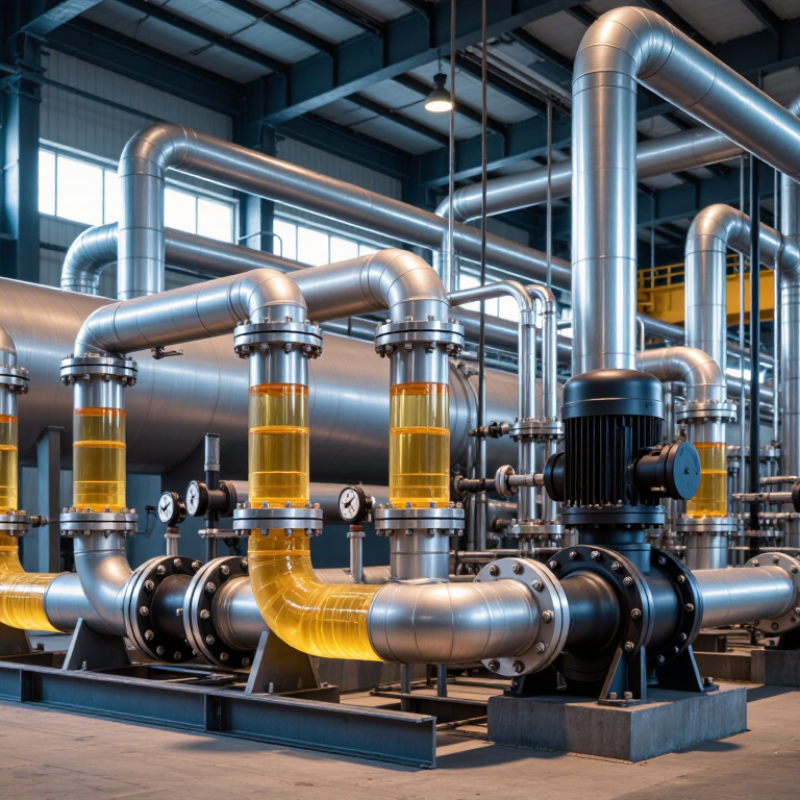
Heat transfer oil is a specially engineered fluid that moves heat through industrial equipment. Unlike water, it can operate at high temperatures without creating extreme pressure. Its job is simple: absorb heat, transport it, and release it where needed. In a typical plant, a pump circulates the oil through a heater, processing line, and heat exchanger. The same fluid repeats this cycle for thousands of hours.
A heater raises the oil’s temperature through controlled combustion or electrical energy. The hot oil then flows through jackets, coils, or reactors. Heat passes through metal walls and warms the product inside. After releasing energy, the oil returns to the heater. An expansion tank allows the fluid to increase in volume safely. Proper circulation matters. Low flow can create hot spots, oxidation, and uneven heating.
Choosing the best heat transfer oil in 2026 requires more than checking its maximum temperature. Thermal stability, viscosity, flash point, pumpability, and material compatibility all deserve attention. A fluid that looks efficient on paper may perform poorly after contamination or long exposure to heat. I have seen maintenance teams overlook small leaks around seals. That shortcut can become expensive. Regular sampling can detect viscosity changes, carbon deposits, and moisture before equipment suffers. No selection is perfect. Operating records should guide adjustments, because real temperatures often differ from design estimates.
Heat transfer oil is a circulating fluid that absorbs heat from an industrial heater and transfers it to process equipment through convection. The most suitable fluid depends on the required operating temperature, thermal stability, viscosity, oxidation resistance, and system design.
The chart shows typical maximum bulk operating temperatures for common heat-transfer-fluid categories. Actual limits vary by formulation, pressure, circulation rate, fluid age, and equipment design. Lower-temperature water-glycol systems are included as a reference because they are widely used where freeze protection and moderate heat transfer are required.
Choosing the best heat transfer oil for 2026 starts with measurable performance, not product labels. The International Energy Agency estimates that industry consumes roughly 37% of global final energy. Efficient thermal transfer therefore affects operating cost, emissions, and production stability.
Thermal stability is essential at elevated temperatures. A suitable oil should resist cracking, sludge formation, and viscosity growth. ASTM D6743 can help evaluate thermal degradation. Viscosity also matters. Lower viscosity improves circulation during startup, while adequate film strength protects pumps and seals. Small details matter.
Specific heat and thermal conductivity determine how much energy the fluid can carry. Low vapor pressure reduces evaporation losses and helps maintain safer system pressure. A high flash point provides an additional safety margin, although it does not replace engineering controls. ASTM D92 offers a recognized flash-point test.
Oxidation resistance becomes critical in expansion tanks exposed to air. DIN 51528 and related industry practices support practical fluid evaluation. Compatibility with carbon steel, stainless steel, gaskets, and insulation should be checked before filling. Laboratory data can look excellent, yet field conditions may disagree. That is the uncomfortable part. Moisture, oxygen, poor filtration, and repeated overheating can shorten service life quickly. Operators should monitor viscosity, acid number, color, and insoluble deposits during routine sampling, following applicable ASTM test methods and site procedures.
| Heat Transfer Fluid Type | Typical Operating Temperature Range | Maximum Bulk Temperature | Kinematic Viscosity at 40°C | Typical Flash Point | Thermal Conductivity at 40°C | Main Advantages | Common Industrial Applications |
|---|---|---|---|---|---|---|---|
| Mineral Oil-Based Fluid | -10°C to 280°C | Approximately 300°C | 25–35 mm²/s | Approximately 200–230°C | 0.125–0.145 W/m·K | Cost-effective, widely available, good heat-transfer performance, simple system maintenance | Food processing equipment, drying ovens, textile machinery, general process heating |
| Synthetic Hydrocarbon Fluid | -30°C to 315°C | Approximately 330°C | 25–32 mm²/s | Approximately 210–240°C | 0.125–0.150 W/m·K | Improved thermal stability, lower deposit formation, extended drain intervals, reliable low-temperature circulation | Chemical reactors, polymer processing, composite manufacturing, industrial ovens |
| Polyalphaolefin-Based Fluid | -50°C to 300°C | Approximately 315°C | 28–40 mm²/s | Approximately 190–225°C | 0.120–0.145 W/m·K | Excellent low-temperature fluidity, oxidation resistance, low volatility, good pumpability | Cold-environment process systems, pharmaceutical production, specialty reactors, precision temperature control |
| Aromatic Synthetic Fluid | -20°C to 350°C | Approximately 370°C | 20–30 mm²/s | Approximately 190–230°C | 0.125–0.155 W/m·K | High-temperature capability, good heat-transfer efficiency, strong resistance to thermal cracking when properly operated | High-temperature ovens, asphalt processing, chemical processing, plastics and resin production |
| Silicone-Based Fluid | -50°C to 300°C | Approximately 315°C | 20–50 mm²/s | Typically above 260°C | 0.145–0.165 W/m·K | Wide operating range, low vapor pressure, strong oxidation resistance, long service life in demanding systems | Electronics manufacturing, laboratory equipment, specialty heating and cooling systems, high-value process equipment |
| Biodegradable Ester-Based Fluid | -20°C to 280°C | Approximately 300°C | 30–45 mm²/s | Approximately 220–260°C | 0.135–0.155 W/m·K | High flash point, favorable environmental profile, good lubricity, suitable for applications with spill-control requirements | Renewable-energy equipment, environmentally sensitive facilities, food-related processing, woodworking and panel production |
Selecting the best heat transfer oil in 2026 starts with understanding its chemistry, not its label. Industrial systems commonly use mineral oils, synthetic hydrocarbons, aromatic fluids, and silicone-based fluids. Each type behaves differently inside heaters, pumps, expansion tanks, and heat exchangers. Mineral oils suit moderate temperatures and controlled budgets. They are practical, but oxidation can increase deposits when air exposure and heat remain high. That risk is often underestimated.
Synthetic hydrocarbon oils generally provide stronger oxidation resistance and longer service life. They work well in closed systems requiring stable performance across changing temperatures. Aromatic heat transfer fluids support higher operating temperatures and efficient heat movement. However, engineers must check seal compatibility, vapor pressure, and ventilation requirements. Silicone fluids tolerate wide temperature ranges and resist chemical breakdown. Their higher cost may not suit every production line. Maintenance teams often discover that the most expensive fluid is not automatically the most reliable choice.
Selection should match the fluid to the heater outlet temperature, maximum film temperature, pump design, and system materials. Viscosity matters during cold starts. A fluid that flows poorly can overload pumps and delay circulation. Operators should also review flash point, thermal expansion, and manufacturer testing data before filling a system. No selection is perfect. A neglected expansion tank or overheated section can damage even premium oil. Regular sampling, filter checks, and temperature logging reveal problems before sludge or vapor formation interrupts production.
Selecting the best heat transfer oil starts with the operating temperature, not the product label. Check the required supply temperature, return temperature, pump pressure, and expansion volume. The U.S. Department of Energy’s Industrial Decarbonization Roadmap reports that process heating represents about 51% of industrial energy use. Small efficiency losses can therefore become expensive across continuous operations. A fluid with suitable viscosity can reduce pump load and improve heat transfer. Too thick at startup, however, may delay circulation.
Thermal stability deserves careful testing. ASTM D6743 evaluates the thermal stability of organic heat transfer fluids under controlled conditions. Ask for recent test data, not only a standard specification sheet. Look for low vapor pressure, strong oxidation resistance, and predictable viscosity changes. The International Energy Agency’s Energy Technology Perspectives 2024 also highlights efficiency as a major industrial decarbonization pathway. That makes fluid life and heat recovery practical selection factors.
During field checks, deposits around heaters often reveal overheating, poor expansion-tank control, or delayed maintenance. I have seen clean-looking oil perform poorly after repeated thermal cycling. This is where judgment matters. Laboratory results cannot replace sampling from the actual circuit. Compare fresh-fluid data with used-oil analysis, including acidity, viscosity, insolubles, and flash point. Selection should also consider seal compatibility, local service temperature, filtration, and safe drainage procedures. The “best” oil is not always the highest-temperature option. It is the fluid that remains stable, pumpable, and measurable in your real operating conditions.
Industrial heat transfer oil operates under severe thermal stress. The U.S. Department of Energy’s Industrial Decarbonization Roadmap reports that process heating uses about 51% of industrial energy. Small maintenance failures can therefore waste energy and create serious hazards. Keep expansion tanks, vents, and relief paths unobstructed. Never add water to hot oil. Even a small amount can flash into steam and cause violent pressure release.
Check oil condition at scheduled intervals, not only after a failure. ASTM D445 supports viscosity testing, while ASTM D664 measures acid number and oxidation-related changes. ASTM D92 helps evaluate flash point. A darkened sample is not automatically unusable, but rising acidity, unusual odor, sludge, or sharp viscosity changes require investigation.
Record operating temperature, top-up volume, laboratory results, and filter changes. These records support traceability and more defensible replacement decisions.
The International Energy Agency reports that industry consumes roughly 37% of global final energy. Efficient fluid maintenance can reduce unnecessary heating losses, but the savings are often overstated. Dirty exchangers, poor insulation, and incorrect control settings may be the real causes.
Replace fluid when testing shows sustained degradation, not simply because it has reached a calendar age. Use compatible hoses, seals, and cleaning methods. Review the procedure after every abnormal event; our first assumption is sometimes wrong.
It is an engineered fluid that moves heat through industrial equipment. It absorbs heat, circulates, and releases energy where needed. The same fluid may repeat this cycle for thousands of hours.
A pump moves the oil through a heater, processing line, and heat exchanger. The heated fluid travels through jackets, coils, or reactors. Metal walls transfer heat to the product. Then the cooler oil returns to the heater.
Heat makes the oil expand. An expansion tank provides space for this volume change. Keep its vents and relief paths clear. Blocked paths can create dangerous pressure.
Start with supply temperature, return temperature, pump pressure, and expansion volume. Check viscosity, thermal stability, flash point, and material compatibility. A high-temperature rating alone is not enough. Real operating records matter more than labels.
Suitable viscosity supports efficient pumping and heat transfer. Oil that is too thick during startup may delay circulation. Poor circulation can create hot spots and uneven heating. Small details matter.
Test samples at scheduled intervals. Review viscosity, acidity, insolubles, moisture, odor, and flash point. Dark oil is not automatically unusable. Sludge, sharp viscosity changes, or rising acidity require investigation.
Check seals, hoses, filters, insulation, exchangers, heaters, and expansion tanks. Deposits near heaters may indicate overheating or poor control. Small leaks can become expensive. I might underestimate them.
Replace it when testing shows sustained degradation. Do not rely only on calendar age. Record temperatures, top-up volumes, laboratory results, and filter changes. Replacement decisions need evidence.
Never add water to hot heat transfer oil. Water can rapidly become steam and cause violent pressure release. Use compatible seals, hoses, and cleaning methods. Review procedures after abnormal events. Our first assumption may be wrong.
This guide explains how Heat Transfer Oil works in industrial systems by circulating thermal energy efficiently between heaters, process equipment, and storage units. It outlines the key properties of high-performance fluids, including thermal stability, oxidation resistance, low vapor pressure, suitable viscosity, and strong heat-transfer efficiency. Readers will also learn about the main types of heat transfer oils and how their operating temperature ranges and chemical characteristics affect system performance.
The article provides a practical framework for selecting the best Heat Transfer Oil in 2026, based on application temperature, equipment design, fluid compatibility, safety requirements, and maintenance conditions. It also covers safe handling, regular monitoring, filtration, leak inspection, fluid testing, and replacement guidelines. By following these recommendations, industrial operators can improve energy efficiency, reduce unplanned downtime, extend equipment service life, and maintain reliable thermal control throughout demanding production processes.

Saier Chemical