How to Choose Hydrocarbon Solvents for Global Sourcing?

Time:2026-09-22 Author:Isabella
0%

Choosing Hydrocarbon Solvents for global sourcing requires more than comparing prices. Performance, safety, documentation, and supply continuity must work together. A solvent that performs well in one plant may create problems elsewhere. Climate, storage conditions, equipment, and local regulations can change the outcome.

Begin with the application. Define evaporation rate, aromatic content, flash point, purity, odor, and residue limits. Then connect each requirement to a measurable specification. A paint manufacturer may need controlled drying in a humid warehouse. A cleaning operation may prioritize low residue and consistent batch quality. Small differences can affect coating appearance, production speed, and worker protection.

Supplier capability matters just as much. Review the safety data sheet, technical data sheet, certificates of analysis, and change-control procedures. Confirm that documents match the shipment and the destination market. Check packaging strength, labeling, transport classification, and storage guidance. Audits, sample testing, and traceable production records provide stronger evidence than sales claims.

Price still matters.

However, the lowest quoted cost may hide delays, rejected batches, or extra testing. Ask suppliers about feedstock sources, backup capacity, lead times, and communication during disruptions. Regional warehouses can reduce delivery risk, but they do not replace technical verification. Independent laboratory testing may be worthwhile before a long-term contract.

No sourcing plan is perfect. Specifications can be too narrow, or practical handling issues may be overlooked. Review real batch results, not only laboratory expectations. A careful decision balances performance, compliance, reliability, and total delivered cost. That balance helps buyers select Hydrocarbon Solvents with greater confidence across changing global markets.
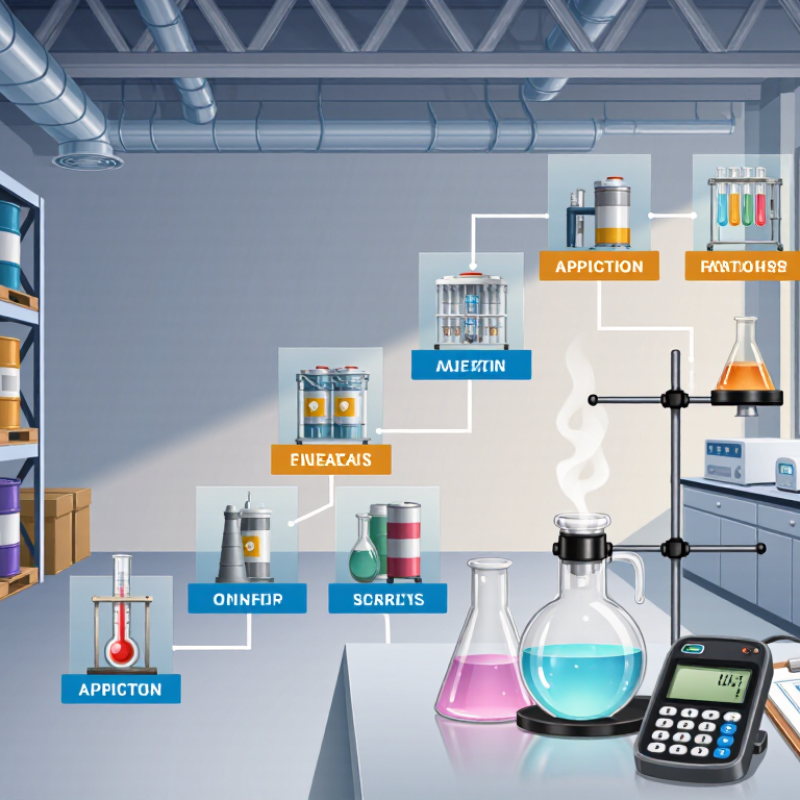
How to Choose Hydrocarbon Solvents for Global Sourcing?

Define Hydrocarbon Solvents and Their Main Industrial Uses

Hydrocarbon solvents are liquid organic compounds made mainly from carbon and hydrogen. They commonly come from petroleum or natural gas processing. Their molecular structure may be aliphatic, aromatic, or cyclic. Each type has different solvency, evaporation, odor, and safety characteristics. These differences directly affect industrial performance.

Hydrocarbon solvents support paints, inks, adhesives, rubber processing, metal cleaning, and extraction applications. In a coating line, solvent selection influences viscosity, drying speed, and surface finish. During metal cleaning, low residue and controlled evaporation may matter more. Rubber processors often consider solvency, equipment compatibility, and process temperature. These decisions should follow actual application data, not price alone.

In plant evaluations, small changes in boiling range can alter drying behavior. That detail is easy to underestimate.

Tips: Request a current technical data sheet, safety data sheet, and certificate of analysis. Check boiling range, flash point, aromatic content, purity, and residue. Ask whether specifications remain consistent across shipments. Test a retained sample in the real process. A small trial may reveal odor, drying, or seal compatibility issues. Confirm storage, transport, labeling, and import requirements for every destination. A cheaper solvent is not useful when delivery becomes unreliable. My review process would also include a second technical opinion. Initial assumptions can be wrong. “Suitable” is not always proven.

Identify Performance Requirements for the Target Application

Choosing a hydrocarbon solvent starts with the target application, not the supplier’s product list. Define what the solvent must do during processing and after use. A coating may need fast evaporation, strong resin solvency, and minimal surface defects. A cleaning fluid may require low residue, controlled drying, and material compatibility. These needs are different.

Measure the details. Check boiling range, flash point, viscosity, aromatic content, odor, and evaporation rate. Test the solvent on the actual substrate, especially plastics, elastomers, painted surfaces, and sensitive metals. A solvent that performs well in a laboratory beaker may soften a seal after several hours. That result is easy to overlook. It should not be.

Tips: Create a simple performance scorecard before global sourcing. Include solvency, drying time, residue, worker exposure controls, packaging, and batch consistency. Request a current technical data sheet and safety data sheet. Ask for representative samples from more than one production lot. Compare results under realistic temperature and ventilation conditions. Small differences can affect an entire production line.

Do not select only by price or nominal purity. A lower-cost grade may evaporate unevenly or require longer cleaning cycles. Confirm whether the specification matches the final application, not merely the chemical name. Document test methods, acceptance limits, and storage conditions. This makes supplier comparisons clearer, although real-world variation still deserves periodic review.

Compare Solvent Types by Composition, Purity, and Key Properties

How to Choose Hydrocarbon Solvents for Global Sourcing?

Hydrocarbon solvents should be compared by composition, purity, and working properties. Aliphatic grades usually offer lower solvency and cleaner odor. Aromatic grades dissolve resins more aggressively. Dearomatized and isoparaffinic grades can improve odor control and evaporation consistency.

Purity requires more than an assay number. Check aromatic content, sulfur, benzene, water, nonvolatile residue, and distillation range. A narrow boiling range often supports steadier drying. Flash point matters during storage and transport. Density affects formulation calculations. The European Environment Agency’s 2024 emissions data identifies solvent use as a significant source of non-methane volatile organic compounds. This supports tighter control of evaporation and workplace exposure. The International Energy Agency’s Oil 2024 report places global oil demand above 100 million barrels per day, but feedstock scale does not guarantee uniform solvent quality. Regional refining differences remain important.

Tips: Request a current certificate of analysis, SDS, and representative sample. Compare test methods, not only reported values. ASTM methods can improve consistency. Run a small application trial at actual temperature and mixing speed. A cheaper solvent may change viscosity, drying time, or surface appearance. One weakness in many sourcing comparisons is overconfidence in supplier specifications. Recheck them after shipment. Tiny differences matter.

How to Choose Hydrocarbon Solvents for Global Sourcing?

Compare solvent types by composition, purity, and key physical properties.

The chart compares representative commercial assay levels for common hydrocarbon solvents. Higher purity generally supports tighter process control, while composition, boiling range, and flash point should be matched to the application, shipping requirements, and local safety regulations.

Solvent type Main composition Representative purity Boiling range Approx. flash point
n-Hexane C6 aliphatic hydrocarbon 95.0% 68–69°C −22°C
n-Heptane C7 straight-chain aliphatic hydrocarbon 99.0% 98–99°C −4°C
Toluene Aromatic C7 hydrocarbon 99.5% 110–111°C 4°C
Mixed xylenes C8 aromatic isomer mixture 98.0% 138–144°C 25–30°C
Cyclohexane C6 cyclic saturated hydrocarbon 99.0% 80–81°C −20°C

Values are representative commercial-grade figures and may vary by specification, region, and test method. Confirm the certificate of analysis, safety data sheet, boiling range, flash point, aromatic content, and regulatory status before global sourcing.

Evaluate Suppliers, Regulations, Packaging, and Global Logistics

How to Choose Hydrocarbon Solvents for Global Sourcing?

Hydrocarbon solvent sourcing is not a price-only exercise. Technical fit, legal status, and delivery resilience must be tested together. Request a current SDS, specification, certificate of analysis, and change-notification policy. Compare boiling range, aromatic content, flash point, impurities, and batch consistency. Do not accept “equivalent” without defining equivalent.

Supplier evaluation should include plant audits, traceability, financial capacity, and contingency production. Use SDS data under the UN Globally Harmonized System, then check destination-specific registration and labeling rules. European shipments may require REACH and CLP checks; other markets use different chemical inventories. Regulatory gaps can stop a drum at the border. That is expensive. A low quotation can still be a poor procurement decision.

Packaging changes the risk profile. Select compliant steel drums, IBCs, or bulk tanks according to compatibility, vapor control, and handling equipment. Verify closures, pallet stability, labels, and temperature exposure before booking. UNCTAD’s Review of Maritime Transport reports that over 80% of global trade by volume moves by sea, making route design material. Build buffers around port congestion, transshipment, and seasonal weather. The International Energy Agency’s Oil 2024 report forecasts oil demand rising by 3.2 million barrels per day from 2023 to 2030, reaching 105.4 million barrels daily. This supports long-term planning, but it does not guarantee solvent availability. Local inventory may cost more, yet one delayed shipment can cost more.

How to Choose Hydrocarbon Solvents for Global Sourcing? - Evaluate Suppliers, Regulations, Packaging, and Global Logistics
Evaluation Dimension Solvent or Sourcing Profile Typical Technical Data Supplier Evaluation Criteria Regulatory and Documentation Requirements Recommended Packaging Global Logistics Considerations Selection Guidance
Product Performance n-Hexane Boiling point: approximately 68.7°C
Flash point: approximately −22°C
High volatility and strong solvency for selected extraction and cleaning applications
Verify assay, isomer profile, water content, non-volatile residue, and batch-to-batch consistency. Request a recent certificate of analysis for every production lot. Safety Data Sheet required; commonly classified as a flammable liquid and harmful by inhalation. Occupational exposure restrictions may apply because of neurotoxicity concerns. Approved steel drums, UN-certified metal packaging, or closed bulk systems with grounding and bonding. Temperature-controlled storage is usually not required, but exposure to heat, sparks, and direct sunlight must be prevented. Confirm dangerous-goods capability before booking. Choose only when its performance advantages justify stricter worker-exposure controls and transport precautions.
Product Performance n-Heptane Boiling point: approximately 98°C
Flash point: approximately −4°C
Lower volatility than n-hexane with useful non-polar solvency
Compare purity, distillation range, sulfur content, aromatics, water content, and residue after evaporation. Typically regulated as a Class 3 flammable liquid for transport. Confirm the applicable UN number, packing group, and local chemical inventory status. UN-rated steel drums, intermediate bulk containers, or approved tank containers. Use compatible seals and closed filling equipment. Sea freight is generally more economical for full-container quantities. Ensure container ventilation, segregation, and dangerous-goods labeling are compliant.
Product Performance Cyclohexane Boiling point: approximately 80.7°C
Flash point: approximately −20°C
High-purity cyclic hydrocarbon with relatively fast evaporation
Evaluate purity, benzene content, color, water content, non-volatile matter, and odor profile. Commonly shipped as a Class 3 flammable liquid. Review hazard communication, aquatic-toxicity statements, and regional substance-registration obligations. UN-certified drums, cans, or bulk containers designed for flammable liquids. Use anti-static transfer procedures. Maintain separation from oxidizers and ignition sources. Confirm that the logistics provider accepts the product under the current transport classification.
Product Performance Low-aromatic or dearomatized hydrocarbon solvent Typical boiling range: approximately 140–200°C
Typical flash-point range: approximately 35–75°C
Lower aromatic content and slower evaporation than light aliphatic solvents
Compare aromatic content, boiling range, flash point, viscosity, sulfur, odor, color, and evaporation residue. Confirm whether the grade is narrow-cut or broad-cut. Classification depends on the exact formulation and flash point. Obtain a product-specific SDS and transport classification rather than relying only on the trade description. Steel drums, UN-certified IBCs, flexitanks where permitted, or bulk tankers for high-volume supply. Higher flash points may simplify some handling requirements, but the product can still be regulated as dangerous goods. Check temperature limits during winter and summer transport.
Supplier Capability Primary producer or integrated refinery source Usually offers large-volume availability, defined production specifications, and established batch-control systems. Audit quality systems, process controls, change-notification procedures, production capacity, business continuity, and export experience. Require current SDS, technical data sheet, certificate of analysis, regulatory statements, and traceability documentation. Confirm packaging specifications, closure integrity, palletization, drum markings, and container-loading procedures. Assess port access, loading windows, minimum order quantity, lead time, customs support, and alternative shipment routes.
Supplier Capability Qualified regional distributor May provide smaller order quantities, local stock, repacking, technical support, and shorter domestic delivery times. Verify source traceability, storage conditions, inventory turnover, repacking controls, and ability to preserve the original specification. Confirm local-language labeling, workplace documentation, import records, and compliance with destination-market chemical rules. Common formats include 20–25 L containers, 180–220 L drums, and 1,000 L IBCs, subject to product approval. Can reduce inland transit time and import complexity, but distributor margins and storage charges may increase total landed cost.
Regulatory Review Destination-market compliance screening Product identity should include chemical name, composition range, CAS information where applicable, and physical-hazard data. Ask whether the supplier can support regulatory questionnaires, substance inventories, restricted-substance declarations, and customer audits. Review registration or notification requirements, GHS classification, SDS language, label elements, import duties, and transport rules. Requirements differ by jurisdiction and product composition. Packaging must carry durable hazard labels, orientation marks where required, and UN markings when applicable. Confirm documentation requirements for sea, air, road, and rail transport before dispatch. Keep emergency contact information available throughout the route. Do not purchase solely on price until the exact grade has passed a destination-country compliance review.
Packaging and Handling Drums and small containers Flexible for pilot production and medium-volume demand. Steel packaging generally provides strong mechanical protection for flammable hydrocarbon liquids. Check internal lining compatibility, closure torque, leakage history, pallet stability, and filling weight accuracy. Confirm UN packaging approval where required, correct hazard labels, batch identification, net quantity, and manufacturing date. Use compatible steel or approved high-density polyethylene containers. Keep caps closed and use secondary containment during storage. Higher packaging cost per kilogram and more handling points than bulk supply. Inspect for dents, corrosion, leakage, and label damage on arrival. Prefer for low-to-medium annual consumption, multiple destinations, or applications requiring flexible inventory control.
Packaging and Handling Intermediate bulk containers and tank shipments Lower packaging intensity per unit of product and more efficient for regular industrial consumption. Verify tank-cleaning records, material compatibility, grounding procedures, loading accuracy, and return or disposal arrangements. Confirm approval status, dangerous-goods marking, equipment inspection dates, and local rules for bulk storage. Use approved IBCs, tank containers, or road tankers with compatible valves, gaskets, and pressure-relief systems. Lower unit logistics cost may be offset by demurrage, cleaning, repositioning, and minimum-volume requirements.
Global Logistics Full-container sea freight Generally the most cost-efficient option for large, non-urgent shipments of packaged or bulk solvent. Evaluate carrier acceptance, dangerous-goods booking experience, documentation accuracy, and contingency planning. Shipment must comply with applicable maritime dangerous-goods requirements, including correct classification, declaration, marks, and labels. Secure all packages against movement, use suitable dunnage, and protect closures from impact. Typical planning should include production lead time, port congestion, customs clearance, inland delivery, and possible transshipment delays.
Global Logistics Air freight or expedited road freight Faster transit but significantly higher freight cost and more restrictive acceptance criteria. Confirm the logistics provider’s experience with flammable liquids, emergency response procedures, and document review. Air transport may impose stricter quantity, packaging, labeling, and documentation limits than sea or road transport. Use approved inner and outer packaging, leak-proof closures, absorbent materials where required, and protective overpacks. Pre-clear dangerous-goods acceptance before cargo pickup. Avoid assuming that a shipment accepted by sea freight will be accepted by air. Reserve for production interruptions, validated urgent demand, or critical shortages rather than routine procurement.
Total Landed Cost Delivered-cost comparison Compare product price together with packaging, freight, insurance, duties, customs fees, storage, testing, and loss allowances. Require transparent quotations with Incoterms, validity period, minimum order quantity, payment terms, and surcharge structure. Include compliance testing, local registration support, import permits, and documentation translation where applicable. Calculate packaging disposal, returnable-container handling, pallet charges, and damaged-package replacement costs. Model at least two routes and two supply scenarios to account for currency changes, port delays, and fuel surcharges.
Data note: Physical-property values are typical reference values for commonly supplied grades. Exact boiling range, flash point, composition, transport classification, packaging approval, and regulatory obligations depend on the supplier’s formulation and destination country. Always confirm the current product-specific Safety Data Sheet, technical data sheet, certificate of analysis, and applicable transport regulations before purchase or shipment.

Select the Best Solvent Through Cost, Quality, and Risk Analysis

Choosing hydrocarbon solvents for global sourcing requires more than comparing price per drum. Cost analysis should include freight, insurance, storage, duties, testing, and disposal. A lower unit price may create higher costs through long lead times or inconsistent batches. Request quotations with delivery terms, minimum order quantities, payment conditions, and validity periods. Then calculate landed cost for each destination, not just the factory-gate price.

Small delays matter. A few extra days at port can interrupt production.

Quality requirements should be written before supplier selection. Define boiling range, flash point, aromatic content, sulfur, moisture, color, and evaporation residue. Ask for recent certificates of analysis, safety data sheets, batch traceability, and retained samples.

Confirm that packaging suits the climate and transport route. Heat, humidity, or damaged seals can affect performance before the solvent reaches your site.

Risk analysis should review supplier capacity, inspection practices, insurance, currency exposure, and regional logistics. A qualified second source can reduce disruption, but it may not match the first source perfectly. Test equivalence in the actual formulation. Do not accept a certificate as the whole story. My own evaluation would leave room for doubt, because forecasts can miss port congestion, raw material shortages, or sudden specification changes. The strongest decision balances measurable cost, verified quality, and realistic supply resilience.

FAQS

How should I define solvent requirements for a target application?

Start with the process, not a product list. Coatings may need quick evaporation and strong resin solvency. Cleaning fluids may need low residue and material compatibility. Write measurable requirements before comparing suppliers.

Which solvent properties should be tested?

Check boiling range, flash point, viscosity, aromatic content, odor, and evaporation rate. Also measure residue after drying. Small differences can disrupt production.

Why should testing use the actual substrate?

Test plastics, elastomers, painted surfaces, and sensitive metals. A solvent may work in a glass beaker but soften a seal after several hours. That result matters.

What should a solvent performance scorecard include?

Include solvency, drying time, residue, exposure controls, packaging, and batch consistency. Record test methods and acceptance limits. Keep it simple.

How can I compare the real cost of global sourcing?

Calculate landed cost for each destination. Include freight, insurance, storage, duties, testing, and disposal. A lower drum price may hide longer cleaning cycles or port delays.

Which quality documents should suppliers provide?

Request current technical and safety data sheets. Ask for recent certificates of analysis, batch traceability, and retained samples. Do not treat one certificate as the whole story.

How can packaging and transport affect solvent quality?

Confirm that packaging fits the climate and route. Heat, humidity, and damaged seals can change performance before delivery. Inspect containers when they arrive.

Is using a second source enough to reduce supply risk?

A qualified second source can reduce disruption. However, its solvent may not match the original batch perfectly. Test equivalence in the actual formulation. Forecasts can still fail.

Conclusion

Choosing Hydrocarbon Solvents for global sourcing requires a clear understanding of their industrial role and the performance demands of the intended application. These solvents are commonly used in coatings, adhesives, cleaning products, extraction processes, and manufacturing operations. Buyers should evaluate properties such as solvency strength, evaporation rate, boiling range, flash point, odor, compatibility, and purity to ensure reliable performance and safe handling.

A successful sourcing strategy also involves comparing solvent types by composition and technical specifications, while assessing supplier consistency, documentation, packaging options, transportation conditions, and regional requirements. The final decision should balance purchase price with quality, availability, storage needs, and supply-chain risks. By applying a structured cost, quality, and risk analysis, companies can select a solvent that meets production goals, supports regulatory compliance, and remains dependable across international procurement channels.

Isabella

Isabella

Isabella is a dedicated marketing professional with a sharp focus on driving brand growth and engagement through strategic content creation. With an extensive background in digital marketing, she combines her passion for storytelling with her keen understanding of industry trends to deliver......