China’s aromatic hydrocarbons industry supports coatings, plastics, adhesives, pharmaceuticals, and advanced manufacturing. This guide introduces ten leading Chinese suppliers with relevant production and export capabilities.
The selection considers product consistency, plant capacity, quality systems, technical support, and delivery performance. It also examines benzene, toluene, xylenes, ethylbenzene, and related solvent grades. Reliable suppliers should provide clear specifications, safety data sheets, batch traceability, and transparent testing records. ISO certifications can offer useful evidence, but they should not replace direct verification.
Details matter.
A practical buyer may compare purity ranges, packaging options, loading ports, lead times, and response speed. A drum label, certificate of analysis, or retained sample can reveal more than a polished website. However, supplier rankings are never completely objective. Market conditions change, public information may be incomplete, and one company’s strongest product may not suit every application. Buyers should confirm current licenses, regulatory compliance, production status, and contract terms before making decisions.
This overview is designed for procurement teams, distributors, formulators, and industrial users seeking dependable Aromatic Hydrocarbons partners in China. It combines market awareness with a cautious review of supplier credibility. The goal is not to make exaggerated promises. Instead, it offers a practical starting point for comparing manufacturers and building safer, more traceable supply relationships.
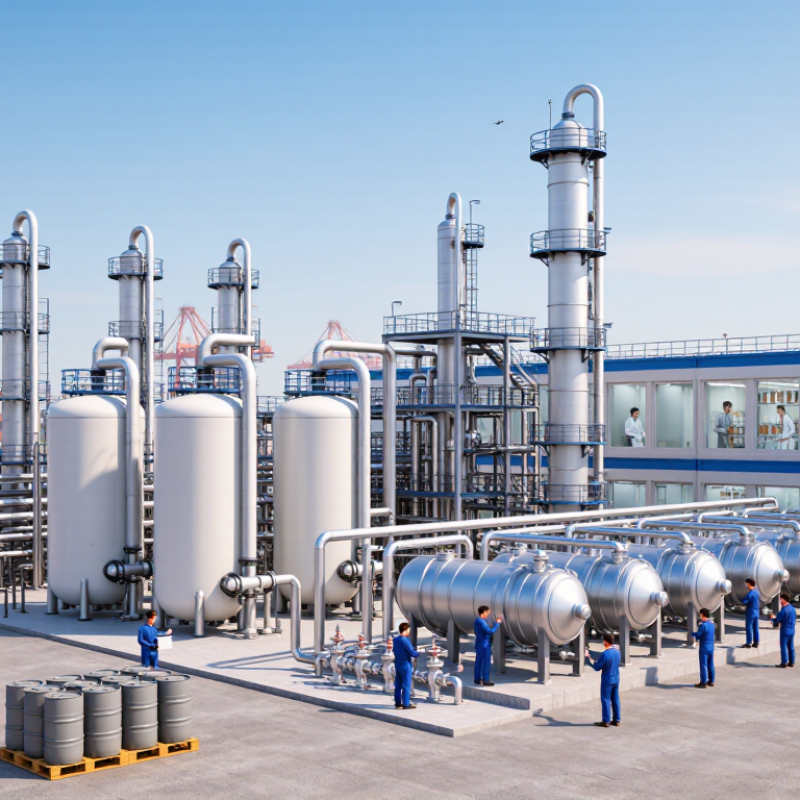
Aromatic hydrocarbons are carbon-based compounds containing one or more stable aromatic rings. Their name comes from structure, not necessarily smell. Benzene, toluene, ethylbenzene, and xylenes are common examples. Naphthalene contains two fused rings and behaves differently in processing. The term can seem simple, but industrial classification is not always tidy.
In manufacturing plants, these materials often begin as carefully separated fractions from petroleum or coal-related feedstocks. Refiners measure purity, moisture, sulfur, and trace contaminants before use. Toluene may serve as a process solvent, while xylenes support polyester and resin production. Ethylbenzene is widely used to make styrene, an important building block for plastics. Benzene supports the production of detergents, synthetic fibers, and other chemical intermediates. Small composition changes can affect color, reaction speed, and final product strength.
Applications depend on controlled handling and accurate specifications. Aromatic hydrocarbons are volatile and flammable, so sealed equipment, ventilation, grounding, and exposure monitoring are essential. Operators should review safety data, storage temperature, and transport requirements before purchase. Supplier evaluation also needs more than a low price; testing records, batch consistency, and technical support matter. In my view, the weakest assumption is that one grade fits every process. It rarely does. A solvent suitable for coatings may perform poorly in polymer production, especially when trace impurities remain.
| Rank | Aromatic Hydrocarbon | CAS Registry Number | Molecular Formula | Molar Mass | Boiling Point | Common Supply Form | Key Industrial Applications | Typical Downstream Industries |
|---|---|---|---|---|---|---|---|---|
| 1 | Benzene | 71-43-2 | C6H6 | 78.11 g/mol | 80.1 °C | Bulk liquid | Production of ethylbenzene, cumene, cyclohexane, aniline, and maleic anhydride | Resins, plastics, synthetic fibers, detergents, coatings, and chemical intermediates |
| 2 | Toluene | 108-88-3 | C7H8 | 92.14 g/mol | 110.6 °C | Bulk liquid | Solvent applications and production of toluene diisocyanate, benzoic acid, and benzene | Polyurethane, paints, adhesives, printing inks, pharmaceuticals, and rubber processing |
| 3 | Ethylbenzene | 100-41-4 | C8H10 | 106.17 g/mol | 136.2 °C | Bulk liquid | Primary feedstock for styrene monomer production | Polystyrene, expandable polystyrene, ABS resin, synthetic rubber, and engineering plastics |
| 4 | o-Xylene | 95-47-6 | C8H10 | 106.17 g/mol | 144.4 °C | Bulk liquid | Production of phthalic anhydride and use as an industrial solvent | Plasticizers, alkyd resins, coatings, pigments, and chemical manufacturing |
| 5 | m-Xylene | 108-38-3 | C8H10 | 106.17 g/mol | 139.1 °C | Bulk liquid | Feedstock for isophthalic acid and selected solvent and blending applications | Unsaturated polyester resins, coatings, adhesives, and specialty chemical production |
| 6 | p-Xylene | 106-42-3 | C8H10 | 106.17 g/mol | 138.4 °C | Bulk liquid | Production of purified terephthalic acid and dimethyl terephthalate | Polyester fibers, PET bottles, films, packaging, and textile materials |
| 7 | Styrene | 100-42-5 | C8H8 | 104.15 g/mol | 145.2 °C | Inhibited liquid monomer | Manufacture of polystyrene, expandable polystyrene, ABS, SAN, and styrene-butadiene rubber | Packaging, insulation, appliances, automotive components, construction, and consumer goods |
| 8 | Cumene | 98-82-8 | C9H12 | 120.19 g/mol | 152.4 °C | Bulk liquid | Feedstock for phenol and acetone production through the cumene process | Polycarbonate, epoxy resins, phenolic resins, solvents, and pharmaceutical intermediates |
| 9 | Naphthalene | 91-20-3 | C10H8 | 128.17 g/mol | 218.0 °C | Solid flakes or briquettes | Production of phthalic anhydride, naphthalene sulfonates, and specialty chemical intermediates | Construction chemicals, dyes, pigments, plasticizers, resins, and moth-repellent products |
| 10 | 1,3,5-Trimethylbenzene | 108-67-8 | C9H12 | 120.19 g/mol | 164.7 °C | Bulk liquid | Use as a solvent, blending component, and intermediate for aromatic specialty chemicals | Coatings, printing inks, electronics chemicals, fragrances, and high-boiling solvent formulations |
Common products include benzene, toluene, mixed xylenes, and ethylbenzene. They support plastics, solvents, coatings, polyester, and other chemical production.
Many suppliers operate near coastal refineries, ports, storage tanks, and chemical parks. These connections reduce inland transport. Some inland producers remain important during regional demand changes.
Review monthly output, operating history, export experience, tank capacity, and loading speed. Do not rely on capacity claims alone. Delivery records may reveal more.
Request recent certificates of analysis, safety data sheets, retained samples, and production records. Check purity, water, sulfur, color, and non-aromatic content. An independent laboratory should verify selected batches.
Each shipment should connect to a production lot, test method, storage tank, and loading date. Photographed loading records and sealed tanks add useful evidence. Small details matter.
Ask about lead times, loading ports, tank or container plans, insurance, and backup routes. The supplier should explain its response to port congestion or maintenance delays. Plans can fail.
Confirm accurate labels, safety documents, product codes, origin certificates, and customs invoices. Sea shipments also require matching dangerous-goods documentation. One wrong code can delay clearance.
Compare product price with freight, insurance, storage, and delivery timing. Pricing may change with crude oil, refinery operations, inventories, and downstream orders. A low quote is not always cheaper.
Give quality and consistency at least 30 percent of the score. Reserve about 20 percent for delivery reliability. Include compliance, logistics, references, and emergency planning. No scorecard is perfect. Recheck it after six months.
Aromatic Hydrocarbons are carbon-based compounds characterized by stable ring structures, with common types including benzene, toluene, xylenes, and related derivatives. They are essential raw materials for producing plastics, synthetic fibers, coatings, solvents, adhesives, pharmaceuticals, and other industrial products. This article explains their basic properties, classifications, and major applications while introducing the structure of China’s aromatic hydrocarbons market, including upstream feedstock, refining and processing, storage, transportation, and downstream manufacturing.
It also presents a practical framework for evaluating China’s leading suppliers based on product quality, production capacity, technical expertise, compliance systems, supply stability, logistics efficiency, and export experience. The supplier profiles focus on capabilities and service performance rather than brand promotion, helping international buyers understand sourcing options and risk factors. Special attention is given to quality control, documentation, regulatory conformity, packaging, delivery coordination, and international trade support, providing a clear reference for responsible and efficient procurement.

 Saier Chemical