Saier Chemical
1 / 4
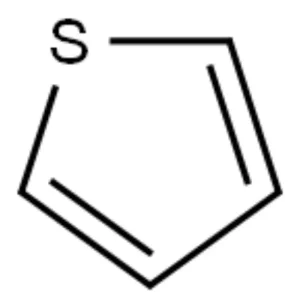
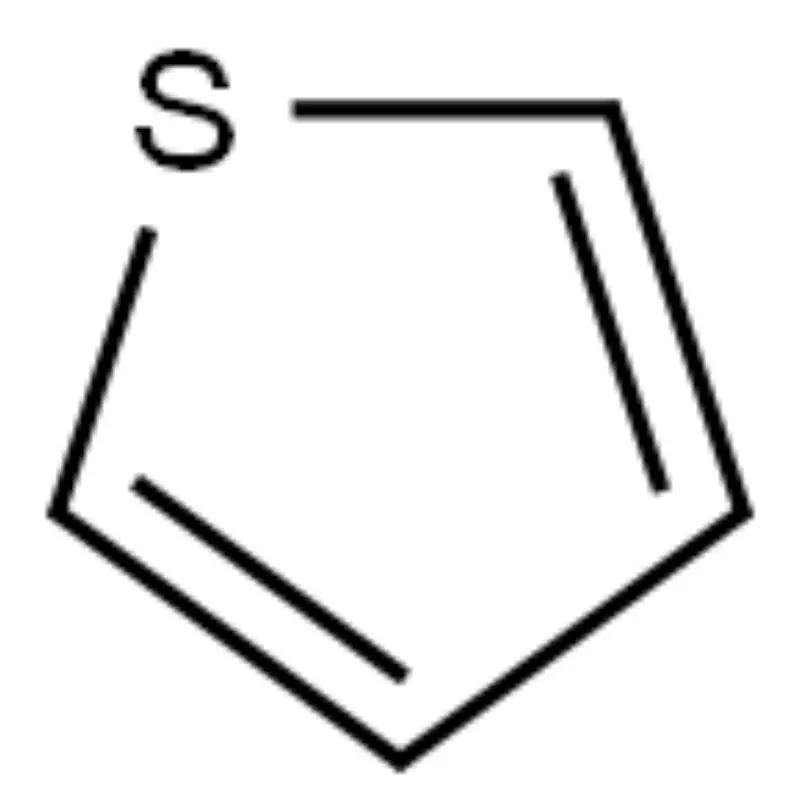
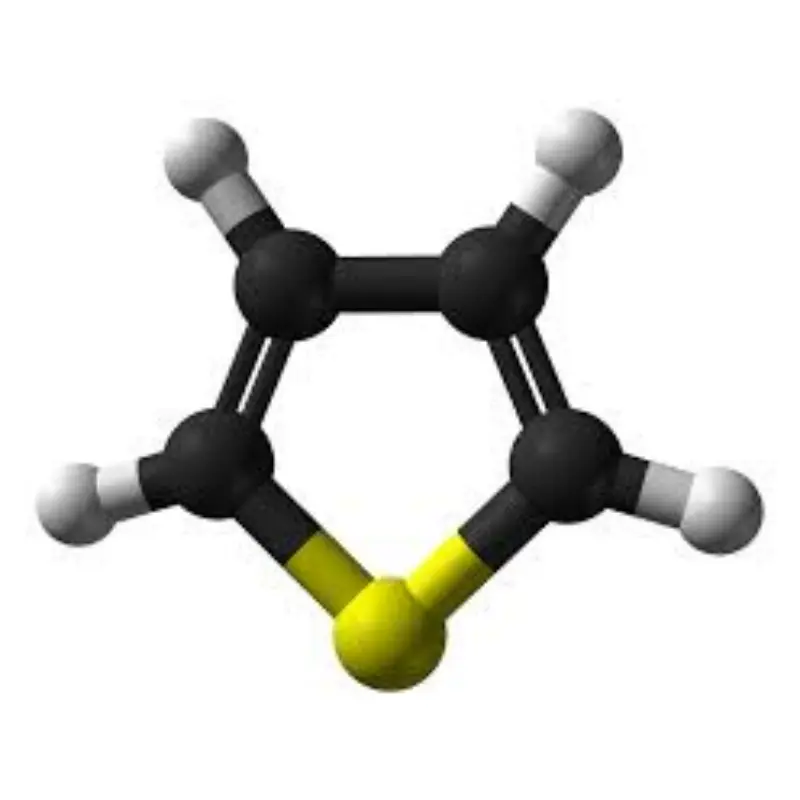
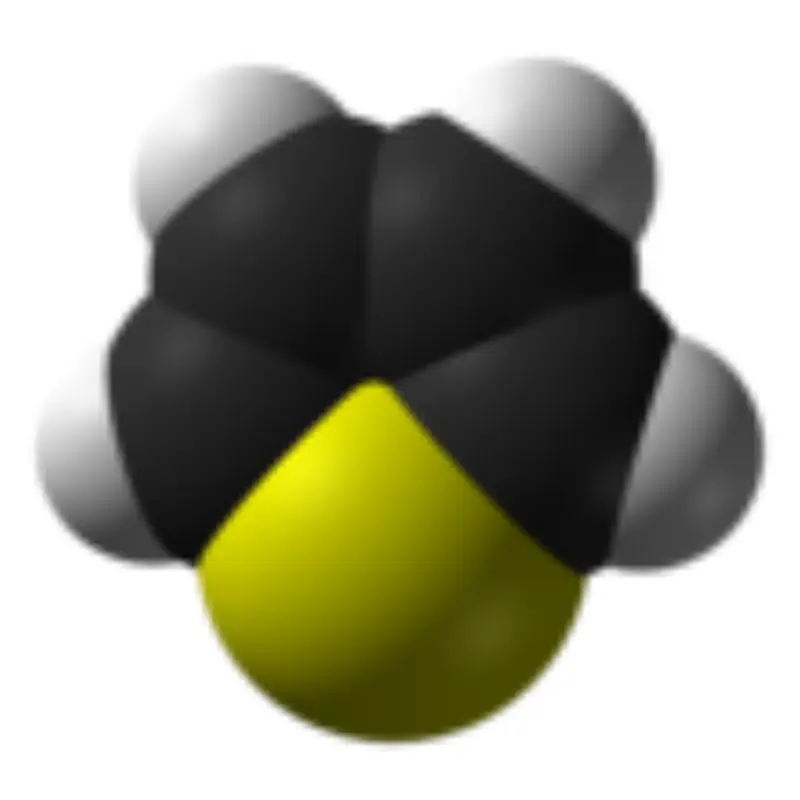
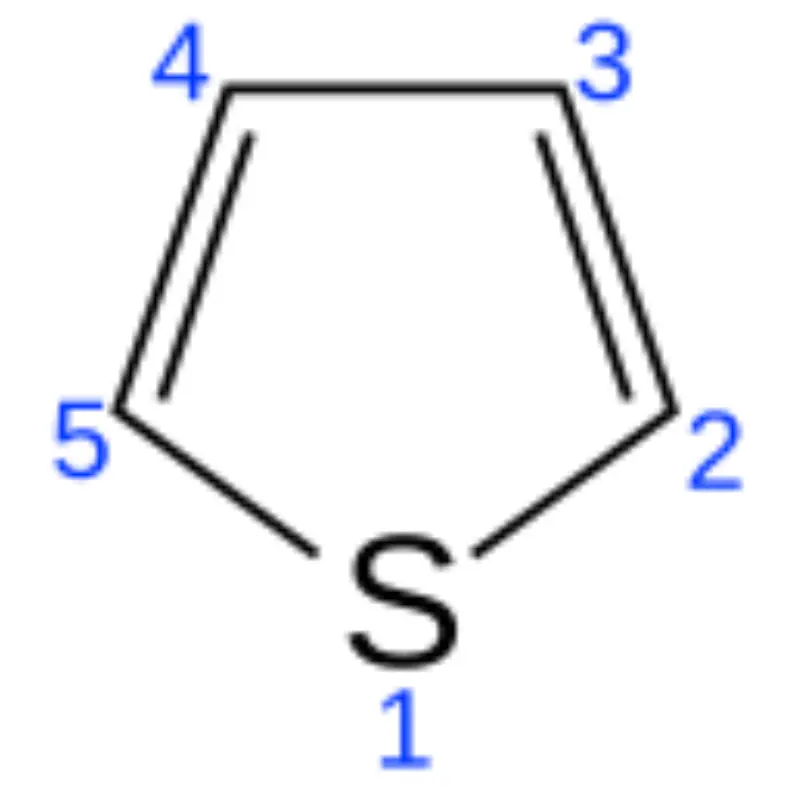
Thiophene is a five-membered heterocyclic compound containing one sulfur atom. It exists in small amounts in crude benzene obtained from coal tar and is a colorless liquid with a similar aromatic odor to benzene. Its boiling point is 84℃, it is insoluble in water, and can dissolve in ethanol, ether, acetone, benzene, carbon tetrachloride, heptane, pyridine, 1,4-dioxane, etc. Thiophene is flammable. It has strong heat resistance and does not decompose even when heated to 850℃. It does not polymerize, decompose or be oxidized under strong acid conditions. It has moderate toxicity.
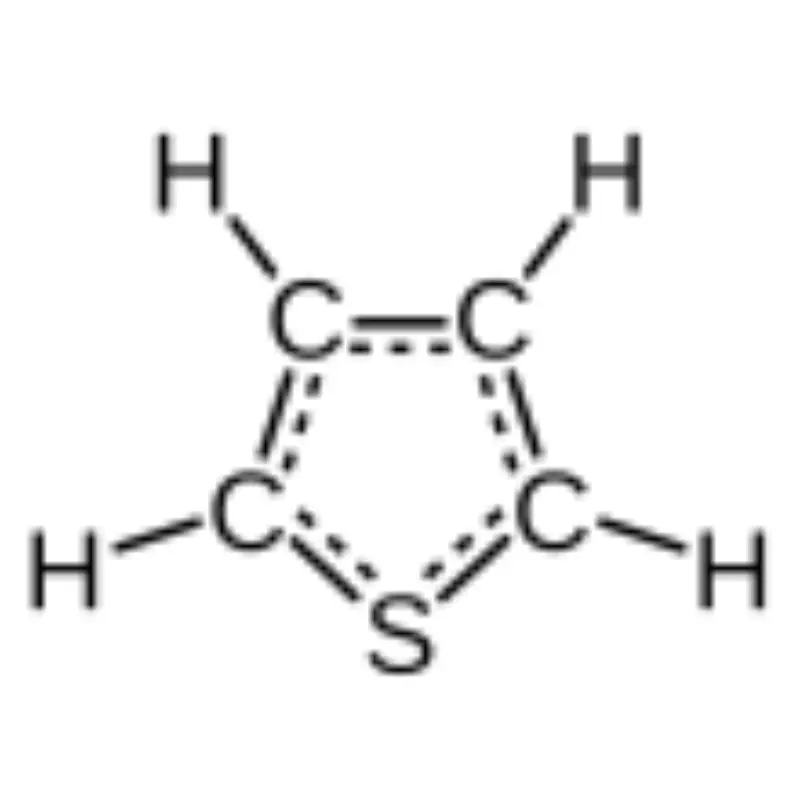
The five atoms on the thiophene ring are all sp2 hybridized and lie in the same plane. The unshared pair of electrons of the sulfur atom occupies the p orbital and overlaps with the p orbitals of the four carbon atoms, forming a closed conjugated system of five atoms with six electrons. Therefore, it has aromaticity. Thiophene is more prone to electrophilic substitution reactions than benzene, and the substitution mainly occurs at the α-position (2-position or 5-position). The important derivative of thiophene is biotin. It can undergo sulfonation reaction with concentrated sulfuric acid at room temperature to produce 2-thiophene sulfonic acid, which is soluble in sulfuric acid. Therefore, this method is commonly used to remove thiophene from crude benzene.
Thiophene can be used for manufacturing dyes, medicines and resins; for synthesizing novel broad-spectrum antibiotics such as penicillin; for the production of color films and special effects photography; for synthesizing some complex reagents; it is an important intermediate for synthesizing phenolic plastics and resins. Thiophene itself is a good dewaxing agent and paint cleaning agent. The derivatives of thiophene have various pharmacological activities. Thiophene azo dyes are numerous in variety and excellent in performance. The sulfonylurea derivatives of thiophene are ultra-efficient and low-toxic new herbicides. Other derivatives can also be used as insecticides, fungicides, growth promoters for animals and plants, etc. Moreover, some derivatives of thiophene are components of organic semiconductors. In conclusion, thiophene and its derivatives have very important positions in the pharmaceutical industry, dye industry, pesticide industry, resin industry, chemical industry, etc.
Thiophene is insoluble in water. However, it can readily dissolve in a wide range of organic solvents, including ethanol, ether, acetone, benzene, carbon tetrachloride, heptane, pyridine, and 1,4-dioxane.
Thiophene exhibits strong heat resistance and does not decompose even when heated up to 850℃. Furthermore, it does not polymerize, decompose, or undergo oxidation under strong acid conditions.
The five atoms on the thiophene ring are all sp2 hybridized and lie in the same plane. The unshared pair of electrons of the sulfur atom occupies the p orbital and overlaps with the p orbitals of the four carbon atoms, forming a closed conjugated system of five atoms with six electrons, which gives it its aromatic properties.
Thiophene undergoes a sulfonation reaction with concentrated sulfuric acid at room temperature to produce 2-thiophene sulfonic acid, which dissolves in the sulfuric acid. This chemical reaction is commonly utilized to separate and remove thiophene from crude benzene.
Thiophene derivatives are widely used to manufacture pharmaceuticals (such as penicillin), dyes, and resins. They are also used as components in organic semiconductors, ultra-efficient and low-toxic herbicides, insecticides, fungicides, and animal or plant growth promoters.
Thiophene is a highly flammable liquid and possesses moderate toxicity. It is incompatible with strong oxidants and nitrates, demanding appropriate care and storage conditions.