Saier Chemical
1 / 2
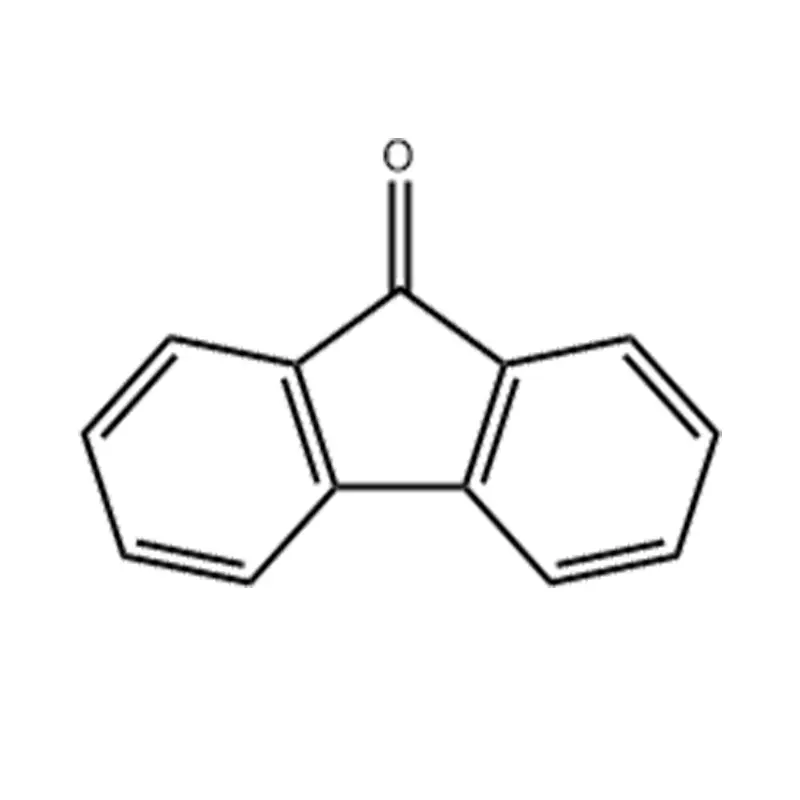
The carbonyl group in the 9-fluorenone molecule has typical properties of ketone compounds and can undergo addition reactions, reduction reactions, etc. For example, it can react with Grignard reagents to generate the corresponding alcohol, and can be reduced with a reducing agent to obtain 9-fluorenol. In addition, electrophilic substitution reactions can occur on the benzene ring of fluorenone. Due to the electron-withdrawing effect of the carbonyl group, the reaction mainly occurs at the meta position of the carbonyl group.
| Property | Specification Value |
|---|---|
| Melting Point | 80-83°C (lit.) |
| Boiling Point | 342°C (lit.) |
| Density | 0.9 g/cm³ |
| Flash point | 163°C |
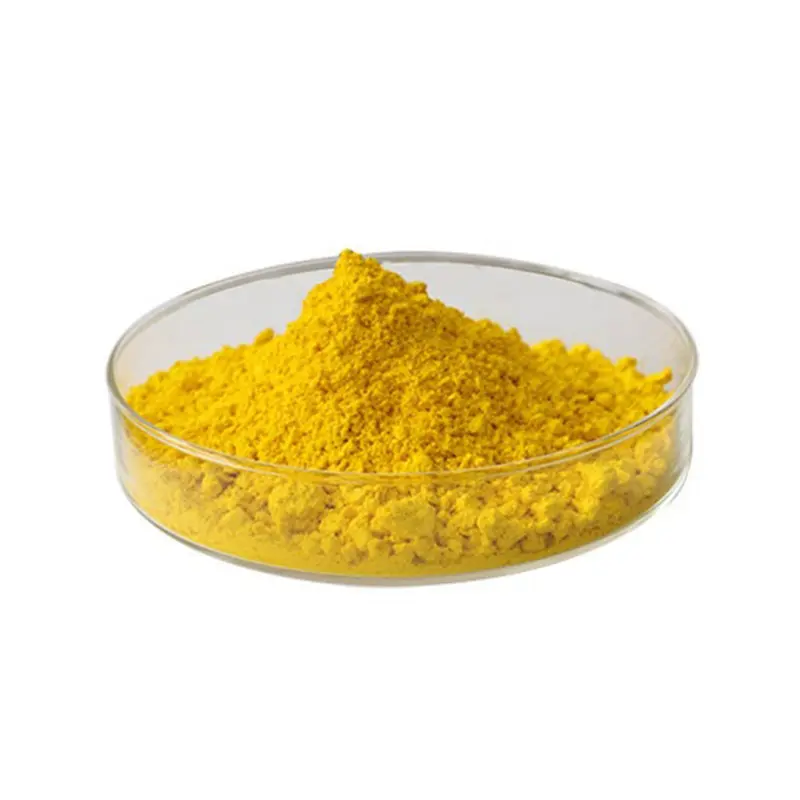
| Form | Crystalline powder or flakes |
| Storage | Store below +30°C |
| Packaging | 25KG Bag |
An important intermediate in organic synthesis, 9-Fluorenone is widely utilized to synthesize a variety of organic compounds, including fluorene derivatives applicable in materials science and medicinal chemistry.
Used to prepare high-performance polymer materials such as polyfluorene and its derivatives. Offering excellent photoelectric properties, they serve as light-emitting or charge transport materials in OLED and OFET devices, enhancing efficiency and stability.
Derivatives of 9-fluorenone demonstrate distinct biological activities and potential value in pharmaceutical R&D, working as lead compounds for structural modifications to create target pharmacological drugs.
9-Fluorenone contains a carbonyl group showing typical ketone characteristics, enabling addition and reduction reactions. Its benzene ring undergoes electrophilic substitution reactions primarily at the meta position relative to the carbonyl group due to electron-withdrawing effects.
It features a melting point of 80-83°C (lit.), a boiling point of 342°C (lit.), a density of 0.9 g/cm³, and a flash point of 163°C.
It is packaged in 25KG bags. It should be stored at temperatures below +30°C in a cool, dry, and well-ventilated warehouse environment.
It is widely used to develop high-performance polymer materials, such as polyfluorene. These optoelectronic materials serve as light-emitting or charge transport layers in OLED and OFET devices to boost device efficiency and lifespan.
Its derivatives exhibit significant biological activities, positioning them as potential lead compounds for structural modification and drug development aiming at specific pharmacological properties.
Due to its irritant nature to the skin, eyes, and respiratory system, avoid direct body contact. As a combustible material, it must be stored away from any heat source, open flames, and strong oxidants.